We Educate And
Empower Students
To Live Mentally
Healthy Lifestyles

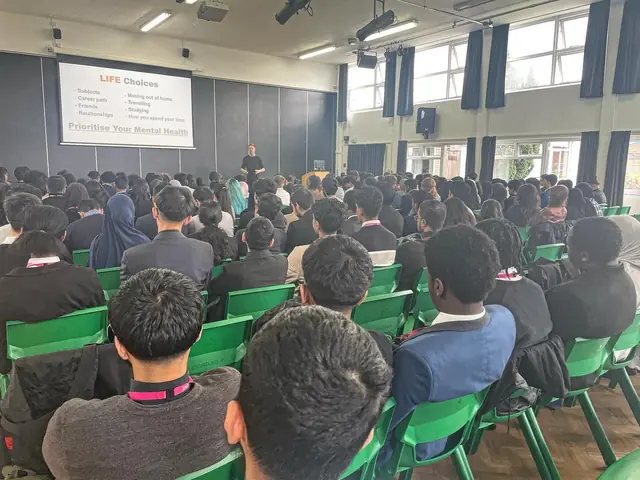
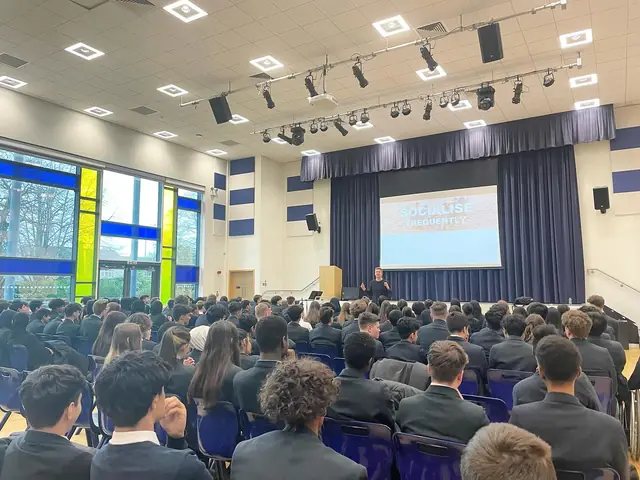
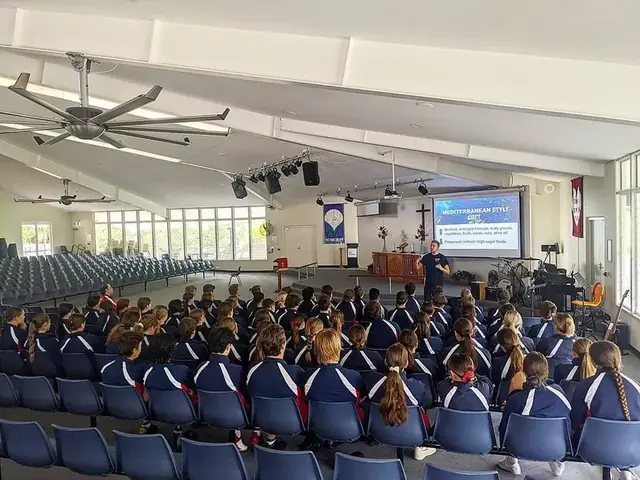
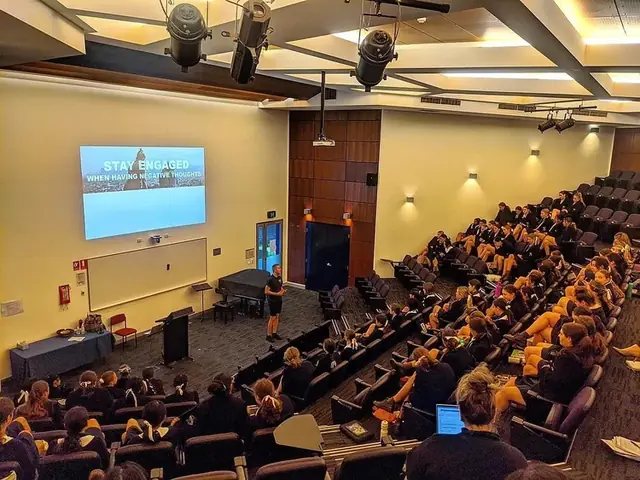
We deliver mental health programmes in London schools that teach students six positive strategies to look after their mental health, and help schools embed them into everyday school life, so students don't just learn them, they live them.

View Our Programmes
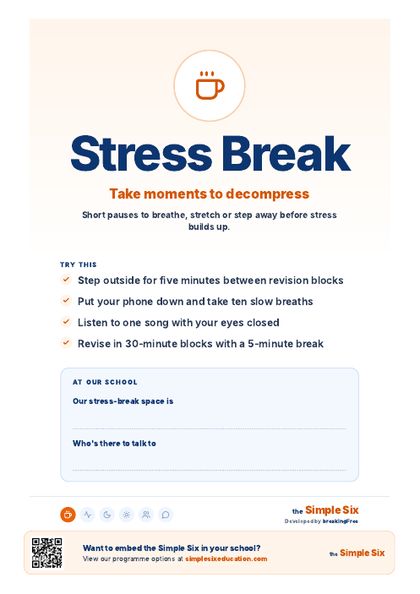
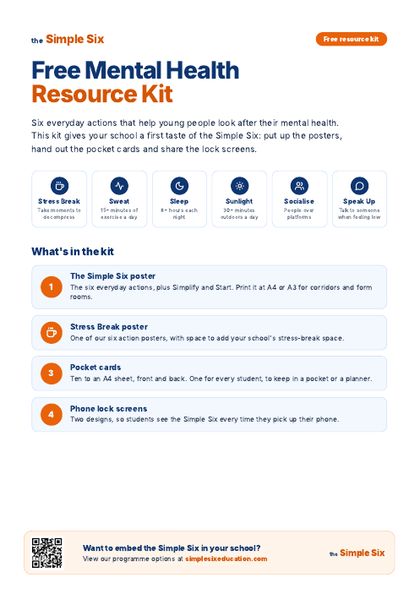
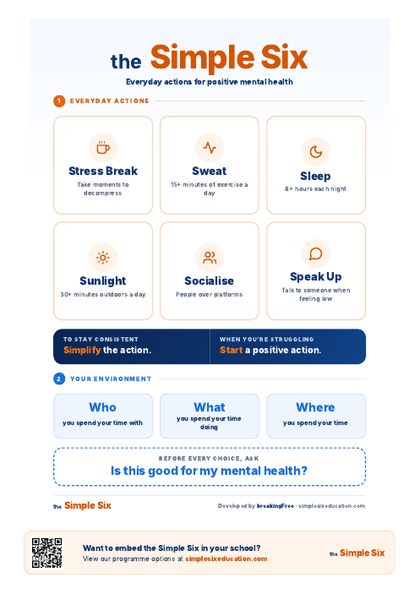
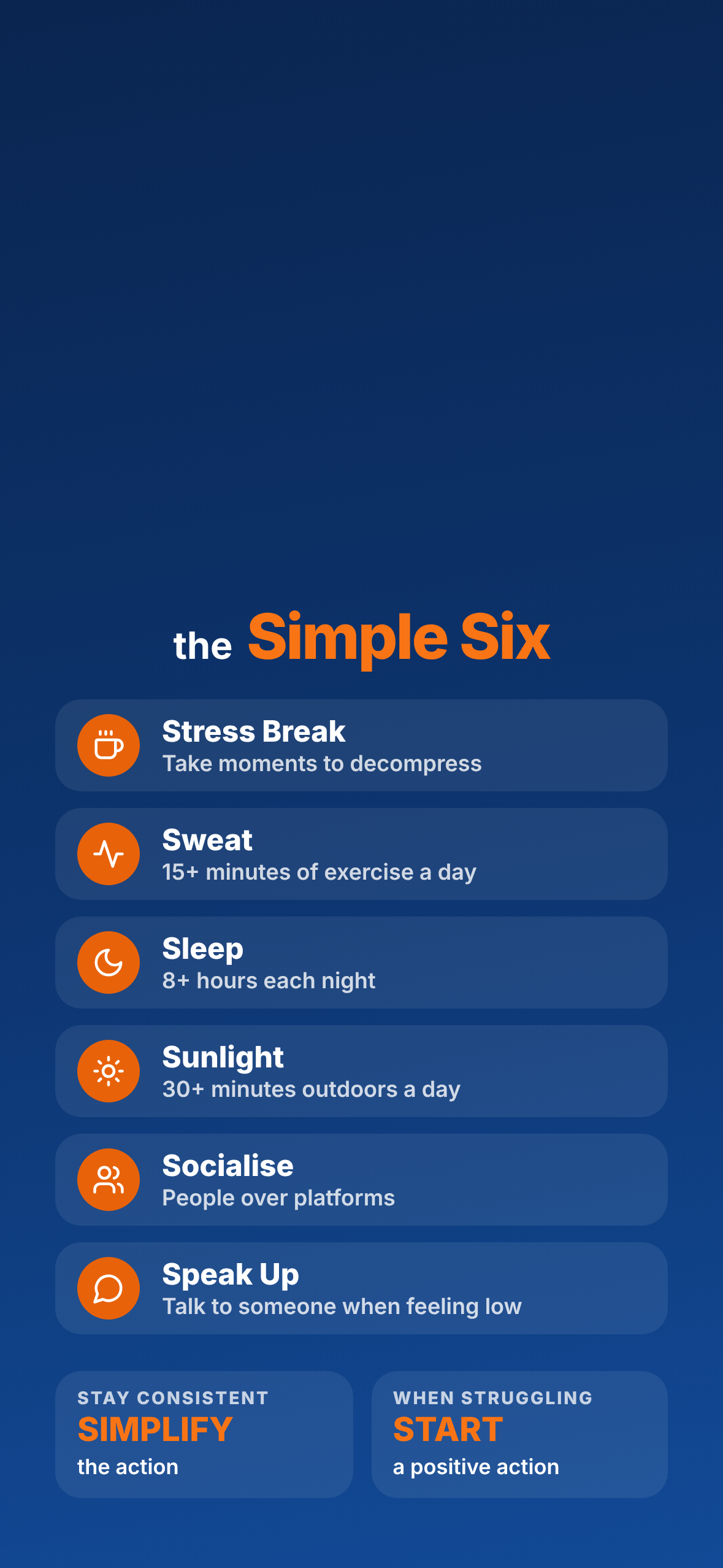
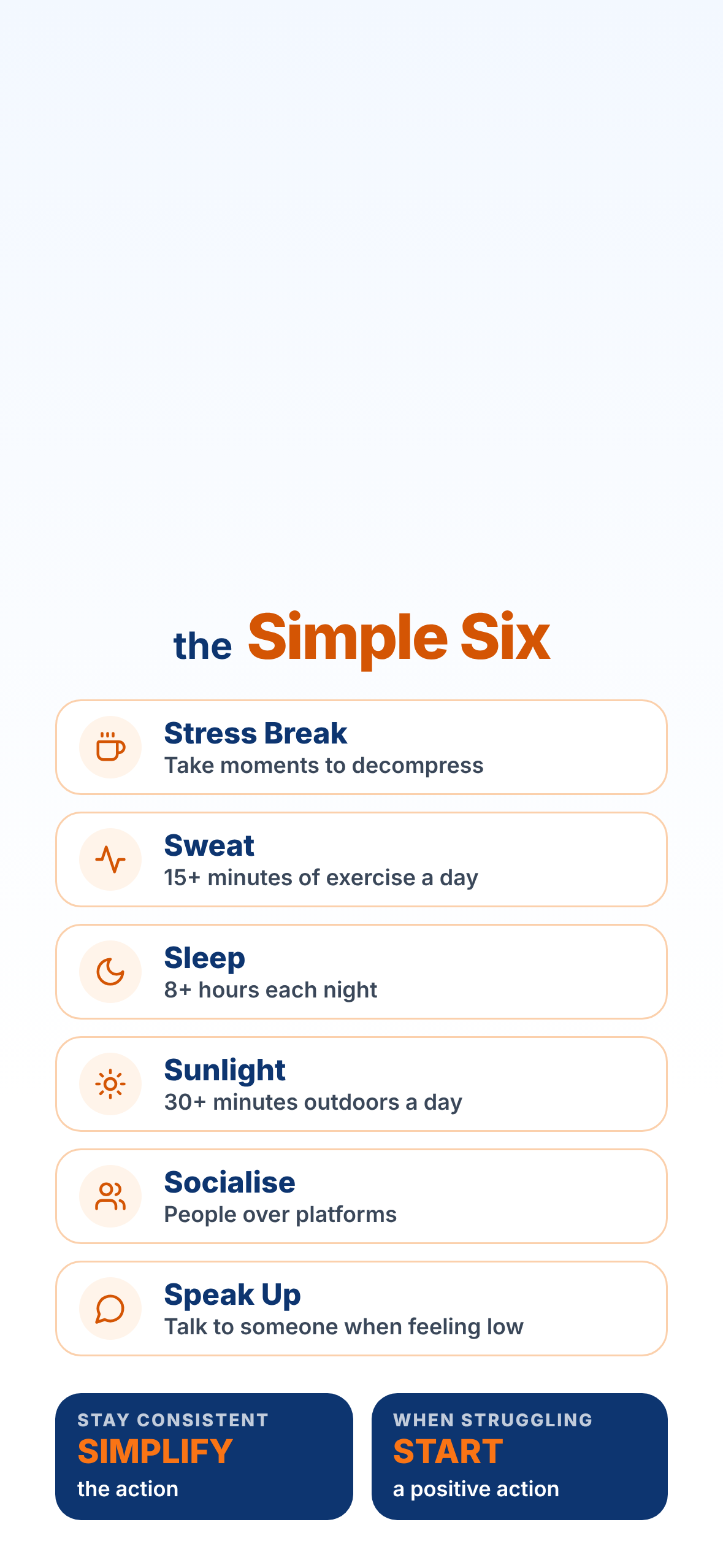
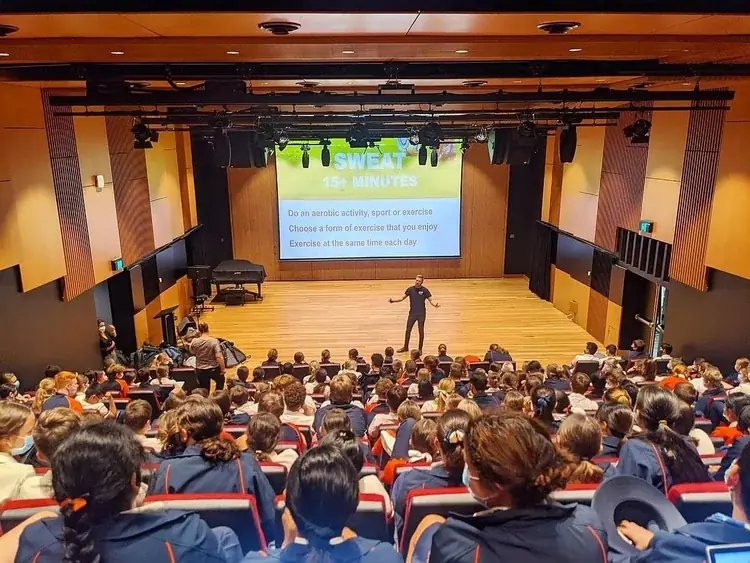
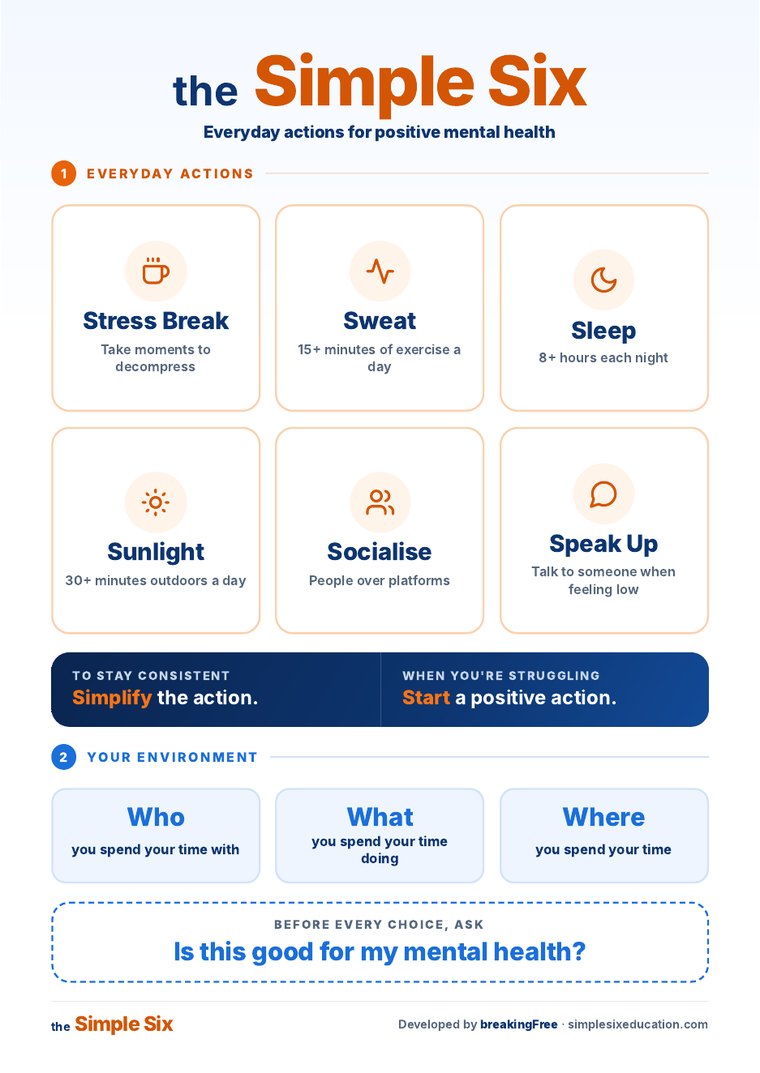
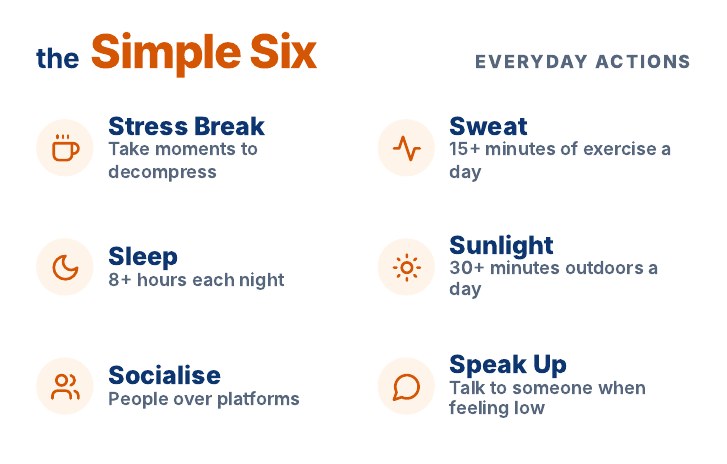
A full school auditorium during a Simple Six presentation on Sweat The Simple Six poster: six everyday actions for positive mental health The Simple Six pocket card
  • 900+Programmes delivered
  • 160,000+Students impacted
  • 13+Years experience

The Simple Six programme in numbers

What We Do

We deliver mental health programmes in London secondary schools that equip students with practical information, strategies and resources to help them effectively look after their mental health.

  • In-Person Programmes

    Engaging presentations that teach your senior students the Simple Six.

  • Online School Portal

    Lesson plans, slide decks, videos and a mental health resource library for staff and students.

  • Staff Consultations

    Advice for your key staff on how to embed the Simple Six into everyday school life.

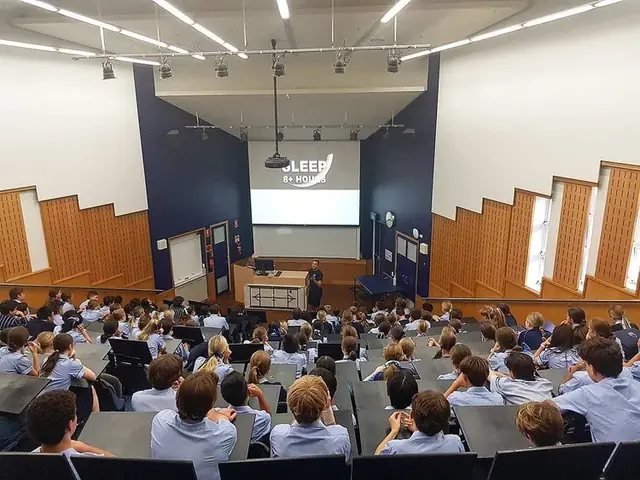
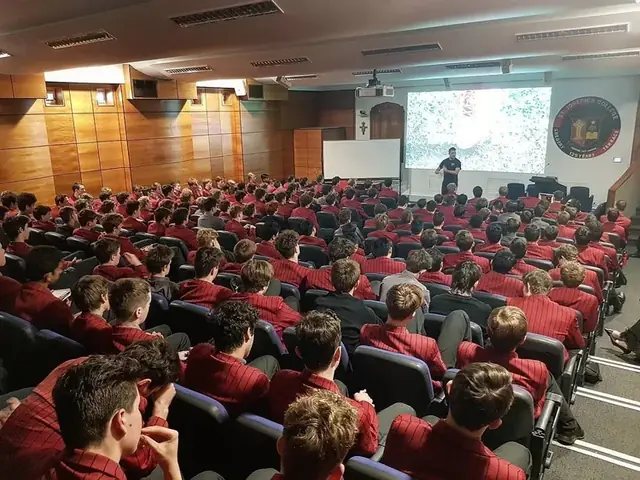
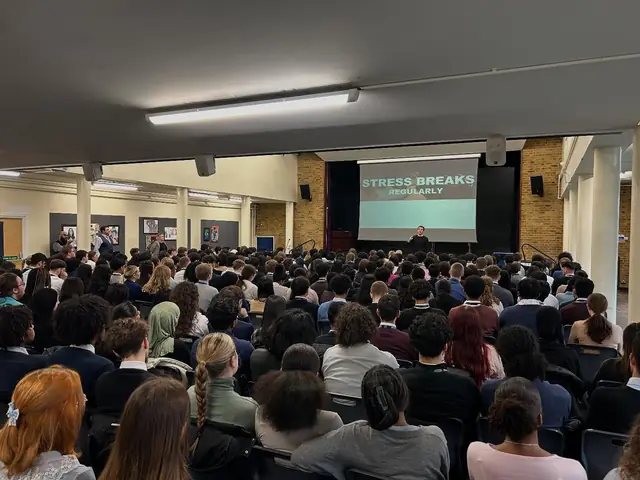
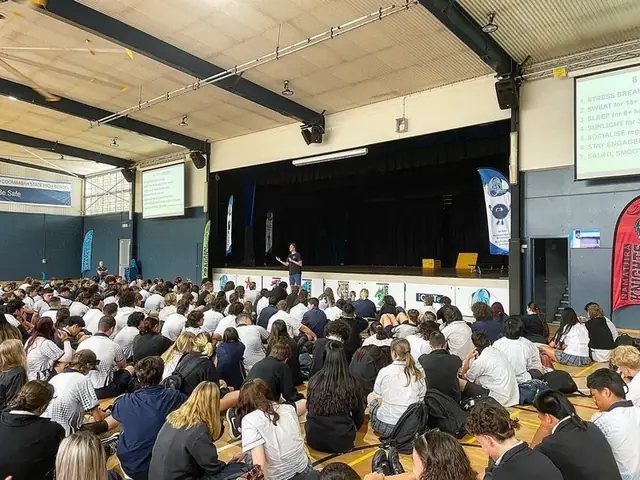
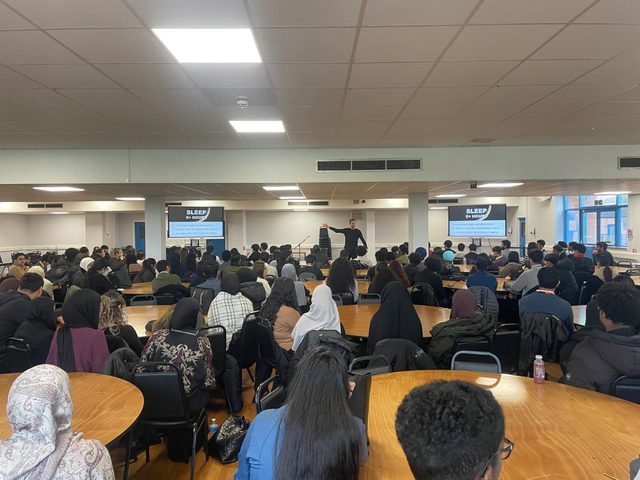
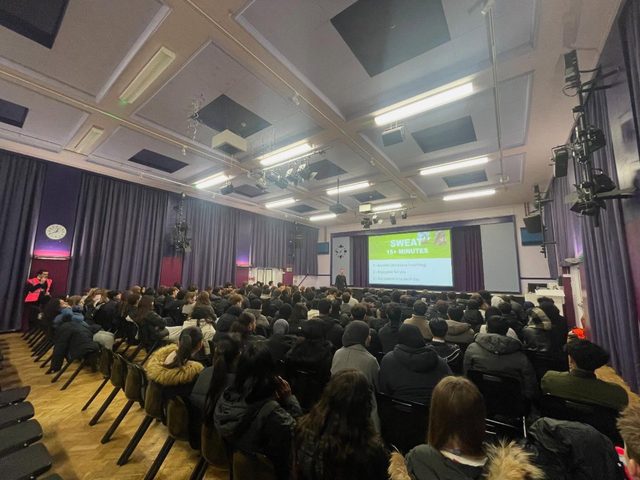
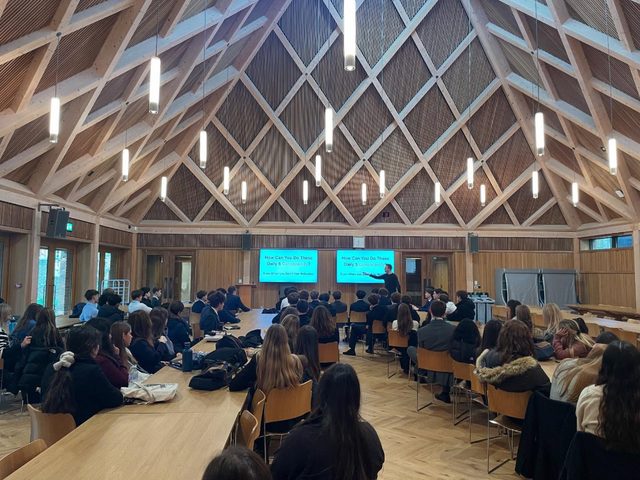
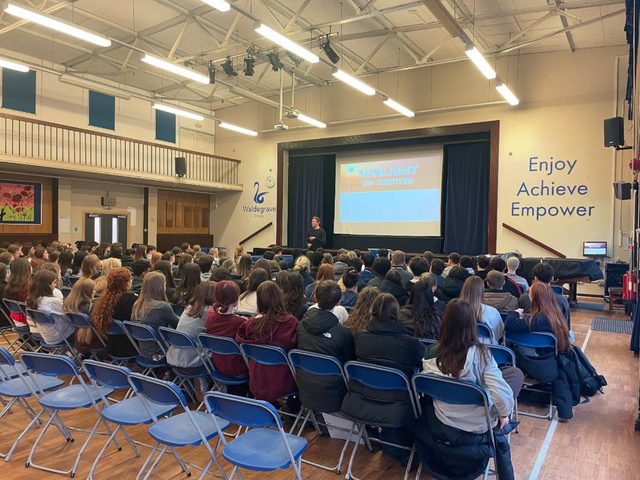
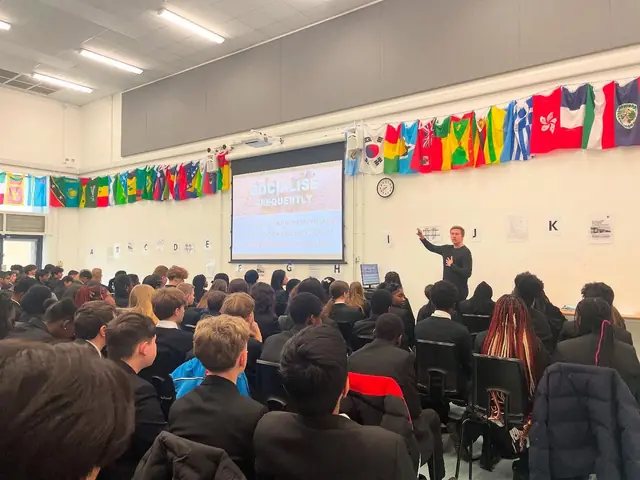
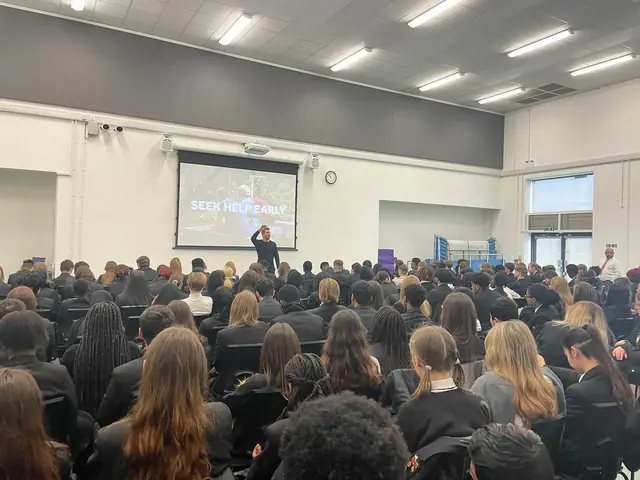
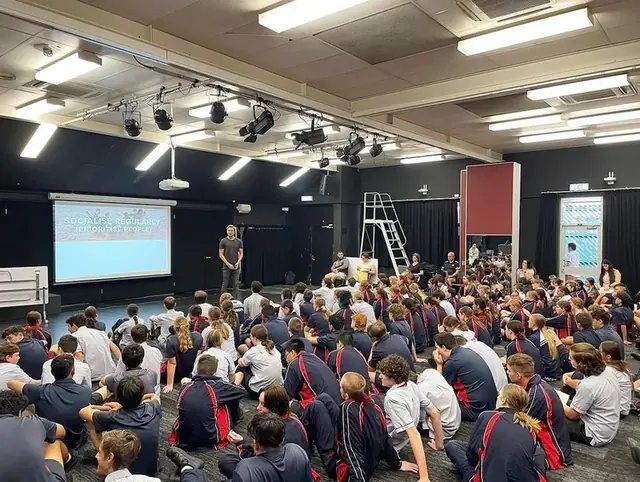
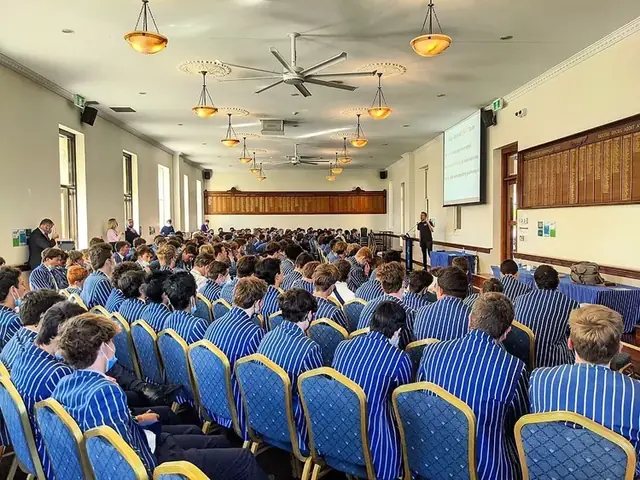
James presenting the Simple Six to a sixth form cohortStudents seated in a school hall during a Simple Six presentationStudents sitting on the floor of a school theatre for the Simple SixStudents in striped blazers at a Simple Six presentation

Schools We
Work With

Trusted by schools across London

  • Queen's College, London
  • Ibstock Place School
  • Kingston Grammar School
  • Bancroft's School
  • Wallington County Grammar
  • Frances Bardsley Academy
  • Dwight School London
  • Northwood School
  • Harris Academy Battersea
  • Brentford School for Girls
  • Waldegrave School
  • Mayfield School
  • Eastbrook School
  • St James Catholic
  • Ruislip High School
  • Welling School
  • St Augustine's Priory
  • St Richard Reynolds Catholic
  • St Olave's Grammar
  • Elthorne Park High School
  • Old Palace of John Whitgift
  • Queensmead School
  • Barking Abbey School
  • Cranford Community College
  • City of London Academy
  • Nower Hill High School
  • Heron Hall Academy
  • Kingsley Academy
  • Richmond Park Academy
  • Chiswick School
  • Haberdashers' Hatcham
Our goal for every school

Six positive mental health strategiesknown by every student,spoken as a shared language,lived every day at school.

Why We Do It

The Problem

Youth mental health in England is getting worse, and fast

Children and young people in England with a probable mental disorder Ages 8 to 16Ages 17 to 19
0%10%20%30%20172020202120222023No survey 2018–19 23.3%ages 17–1920.3%ages 8–1612.5%10.1%
See the figures
YearAges 8 to 16Ages 17 to 19
201712.5%10.1%
202017.1%17.7%
202117.7%17.4%
202219.0%25.7%
202320.3%23.3%

Source: NHS England, Mental Health of Children and Young People in England, 2023 (wave 4). No survey ran in 2018 or 2019, so the dashed line joins 2017 and 2020.

  • 1 in 5

    children aged 8 to 16 had a probable mental disorder in 2023, up from 1 in 8 in 2017.

  • 23.3%

    of 17 to 19 year olds had a probable mental disorder in 2023, more than double the 10.1% in 2017.

  • 1,048,965

    children had an active referral to NHS children's mental health services in 2024–25, almost double the number in 2018–19.

    Children's Commissioner for England, 2026

The Current
Approach

More money, more treatment and more awareness than ever before

  • More
    money

    2018–19£724m2024–25£1.15bn

    a year spent on NHS mental health services for children and young people. Up 58%.Children's Commissioner for England, 2026 (cash terms)

  • More
    treatment

    2018–19564,0002024–251.05m

    children with an active referral to NHS mental health services. Almost double.Children's Commissioner for England, 2026

  • More
    awareness

    20110.7%20203.7%

    of UK university applicants declared a mental health condition. Up 450%.UCAS, 2021

All of this is important. Yet mental health rates have kept rising.

The Missing
Piece

Lifestyle

Despite more support, awareness and treatment, young people's everyday lifestyles are working against their mental health.

  • Stress74%

    of 15-year-old girls in England feel pressured by schoolwork (63% of boys), the third highest of 45 countries.WHO HBSC study, 2017–18

  • MovementOver half

    of children and young people don't get an average of 60 active minutes a day.Sport England, 2024–25

  • Sleep38%

    of 8 to 16 year olds had trouble sleeping on three or more nights in the past week.NHS England, 2023

  • Screen time4 hours

    a day online, on average, for 13 and 14 year olds.Ofcom, 2025

  • Time outdoorsUnder half

    of 8 to 15 year olds spend time in outdoor spaces other than their garden on most days (43%).Natural England, 2025

  • Connection1 in 20

    young people in England have no close friends, five times as many as in 2014.IPPR, 2026

Our brains didn't evolve to spend our days inactive, isolated, sleep-deprived, stressed and indoors.

Daily exercise, managing stress, high-quality sleep, regular sunlight and human connection are all positive for mental health. For many young people, they're missing from everyday life.

How We Do It

Our
Approach

Focus On
Lifestyle

We address the missing piece by focusing on lifestyle and prevention, teaching young people in schools how to live mentally healthy lifestyles. Our approach is simple: we educate students on six positive strategies to look after their mental health, and embed them into everyday school life, so students learn not only what to do, but actually live it every day.

Our Mission

Every student in the UK leaves school knowing the Simple Six by heart, and having lived them every day.

So they step into adult life knowing how to look after their mental health, and are more likely to live a mentally healthy lifestyle.

A shared language for mental health

Just as everyone in London understands “See it. Say it. Sorted.”, we want every young person in the UK to grow up knowing the Simple Six: learned at school, used every day and remembered for life.

  • Simple to rememberSix everyday actions, easy to memorise.
  • PracticalThings students can do today, at school and at home.
  • Useful for lifeThe same six actions help at 12, at 18 and at 40.

Want to support our mission?

Enquire about the Simple Six

Tell us what you're interested in, and we'll be in touch within two working days. Every programme includes a year of your school's access to the Simple Six School Portal.

What are you interested in?
Questions? Email admin@simplesixeducation.com
Viewer
View only
Student booklet · online

My Simple Six Booklet

Lesson 1 of 8

Stress Break

Lesson 2 of 8

Sweat

Lesson 3 of 8

Sleep

Lesson 4 of 8

Sunlight

Lesson 5 of 8

Socialise

Lesson 6 of 8

Speak Up

Lesson 7 of 8

Simplify

Lesson 8 of 8

Start

Saved on this device as you type